Pass the Salt, Share the Story: How American Families Are Finding Common Ground at the Dinner Table
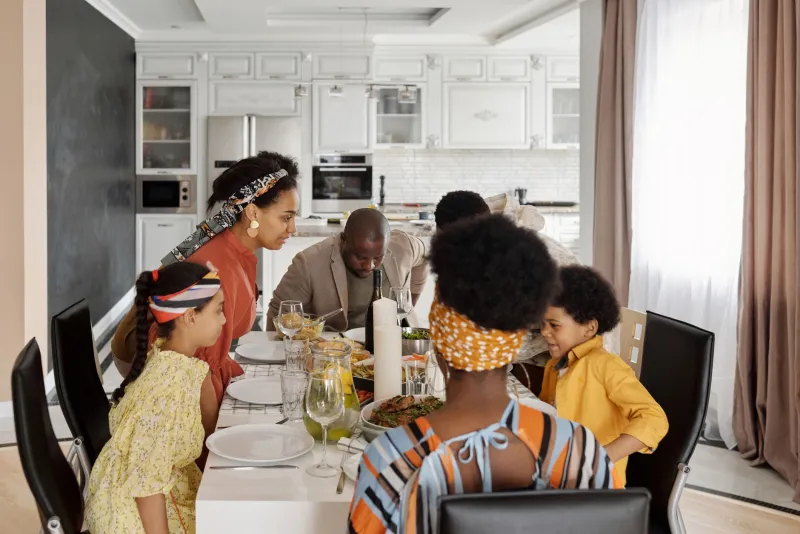
The cornbread was burning slightly on one side, the gravy was still too thin, and three different opinions about the right way to season collard greens were being aired simultaneously. In the kitchen of a small house in Birmingham, Alabama, the Henderson family was, by any objective measure, a little chaotic.
They were also, without quite realizing it, doing something extraordinary.
"We argue about food the same way we argue about everything else," said Deb Henderson, 54, laughing as she stirred. "But somewhere in the middle of all that arguing, we always end up actually talking. Like, really talking."
For the Hendersons — three generations, four distinct political viewpoints, and one very contested cornbread recipe — the dinner table has become something they didn't expect: neutral territory. A place where the differences that feel enormous in the abstract become somehow more manageable when there's a shared meal in front of everyone.
They're far from alone.
Why the Table Still Matters
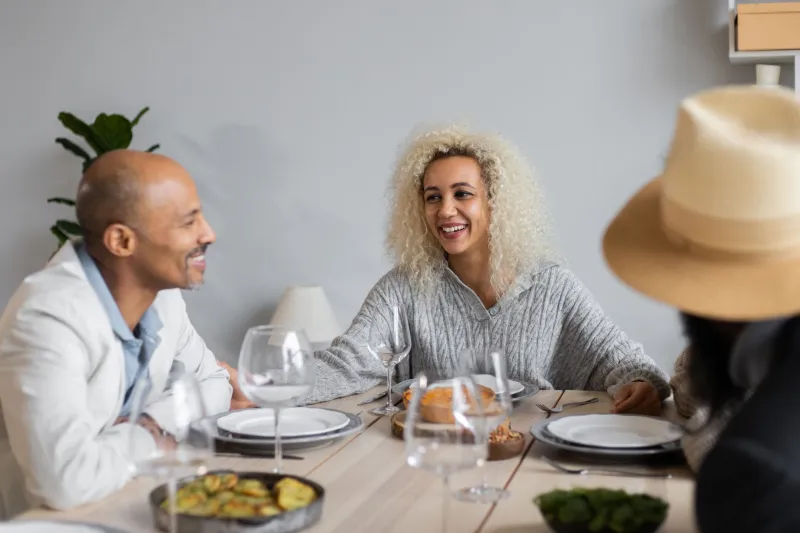
For all the cultural hand-wringing about American division, there's a quieter story unfolding in kitchens and dining rooms across the country. Families are rediscovering the dinner table — not as a battleground, but as a kind of sanctuary. A place where the ordinary rituals of cooking, serving, and eating together create just enough warmth and just enough lowered guard that real conversation becomes possible.
Research in social psychology has long pointed to what's sometimes called the "shared meal effect" — the way eating together increases feelings of trust, cooperation, and emotional closeness between people. There's something almost primal about it. Sharing food is one of the oldest human gestures of goodwill. When we break bread together, our nervous systems genuinely relax.
"The table removes some of the formality that makes hard conversations feel dangerous," says family therapist Renata Chu, who practices in Chicago. "Your hands are busy. There's food to pass. There are small, practical requests — 'can you hand me that?' — that keep reminding you that you're on the same side, even when you're disagreeing. It creates a kind of psychological safety that's really hard to manufacture anywhere else."
The Conversations Nobody Planned to Have
Ask families about their most meaningful dinner table moments, and the stories that come back are rarely the ones they scripted.
For the Okafor-Williams family in Columbus, Ohio, it started with a question their eleven-year-old asked completely out of nowhere: "Why don't we talk about Grandpa?" The table went quiet. Then, slowly, it didn't. "We were there for three hours," said Kwame, 44. "We talked about things my wife and I had been avoiding for years. And somehow, having the kids there, and having dinner in front of us, made it feel safe enough to actually go there."
In Denver, Rosa and her husband Miguel have made a weekly tradition of what they call "question night" — where each family member writes one question on a slip of paper before dinner. The questions go into a bowl. Whoever's turn it is draws one and has to answer honestly before anyone else can respond. The questions have ranged from silly ("If you could only eat one food forever, what would it be?") to genuinely profound ("What's something you wish we understood better about you?").
"We started it because we felt like we were all just passing each other in the house," Rosa explained. "Now Friday nights are the thing everyone actually looks forward to. Even our teenager. Especially our teenager, honestly."
Small Gestures, Big Shifts
What's striking about these families isn't that they've cracked some secret formula. It's how simple the changes actually are. A few conversation prompts. A phone-free rule. Taking turns picking the music. Letting the kids help cook so they feel ownership over the space.
These small gestures add up to something meaningful: they signal that this time, this meal, these people — they matter.
In Portland, Maine, the Castellano family started a tradition they call "the rose and the thorn" — each person shares one good thing from their day and one hard thing. It sounds almost embarrassingly simple. But Patricia Castellano, 38, says it's quietly changed the way her family relates to each other. "My son started telling us things he never would have brought up otherwise," she said. "Not because we asked the perfect question, but because it was just... expected. Normal. Part of dinner."
That normalization is exactly the point. When hard conversations become part of the regular rhythm of a family's life — not a special occasion, not a crisis response — they lose some of their charge. They become just another thing you do together, like passing the salt.
Setting the Table for Connection
None of this requires a perfect family, a perfect meal, or even a real dining room table. One family in Phoenix holds their dinner conversations on a blanket in the backyard. Another in Minneapolis does Sunday morning pancakes instead of evening dinners because that's when everyone's actually home.
The format matters less than the intention. The intention is simple: to show up, to be present, and to remember that the people across from you — even the ones who vote differently, or see the world differently, or season their food in ways you find baffling — are people you chose to gather with. People worth knowing.
"We're not always going to agree," Deb Henderson said, finally declaring the cornbread done and carrying it to the table where three generations were already arguing cheerfully about something else entirely. "But we always eat together. And somehow that's enough to keep us connected."
She set the pan down in the center of the table. Hands reached. Someone laughed. Someone said thank you.
And just like that, dinner began.