Dust Off That Dream: The Unexpected Magic of Picking Up Where You Left Off
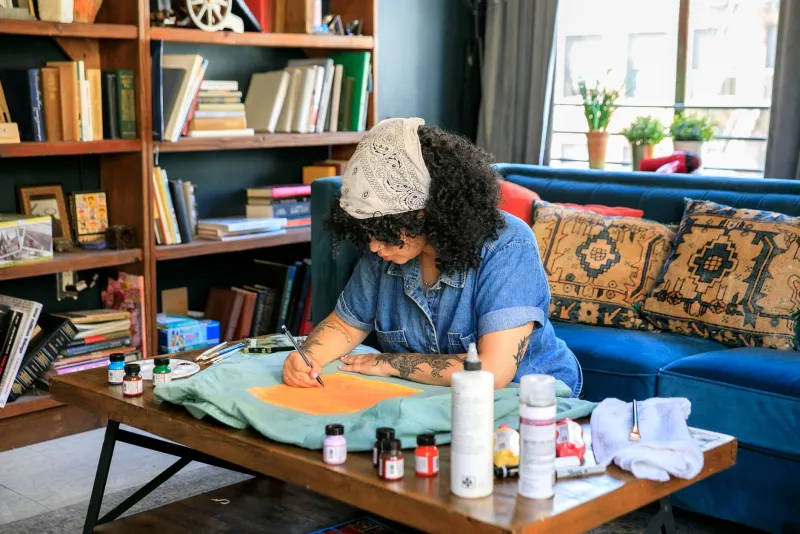
Somewhere in a closet in Columbus, Ohio, there's a half-finished watercolor set. In a garage in Tucson, a guitar with one broken string. In a spare bedroom in Burlington, Vermont, a knitting bag stuffed with yarn that hasn't been touched in eleven years. Sound familiar?
Life has a funny way of crowding out the things we love. Careers ramp up, kids arrive, responsibilities pile on — and somewhere between the chaos and the calendar, that pottery class or that sketchbook just... quietly disappears. But something interesting is happening across America right now. People are going back. Back to the hobbies they shelved. Back to the versions of themselves who painted on Sunday mornings or spent Friday nights learning to salsa dance. And what they're finding when they return? It's even better than they remembered.
Your Brain Kept the Receipt
Here's the part that might genuinely surprise you: neuroscientists say your brain never fully let go of those old skills. Even after years of neglect, the neural pathways associated with a learned ability remain — dormant, maybe, but not deleted. Dr. Lara Boyd, a neuroscientist at the University of British Columbia whose research on neuroplasticity has made waves in wellness communities, describes it as the brain's version of muscle memory. The circuitry is still there, waiting for a signal.
This is why so many people who return to abandoned hobbies report that the relearning process feels almost eerie in its speed. A woman in Nashville who hadn't touched a piano in 15 years sat down last winter and found her fingers remembering chord progressions before her conscious mind caught up. A retired schoolteacher in Portland picked up a crochet hook for the first time since her twenties and had a full dishcloth done by Tuesday.
There's even a name for this phenomenon in learning science: relearning savings. Essentially, you save time — sometimes enormous amounts of it — when you revisit something your brain once knew well. The second time around, you're not starting from zero. You're starting from somewhere much more interesting.
Why It Feels More Magical the Second Time
But the neuroscience only tells half the story. The other half is purely emotional, and it might be the more powerful piece.
When we return to a hobby we once loved, we're not just picking up a skill — we're reconnecting with a version of ourselves. The teenager who wrote poetry. The college kid who spent weekends throwing pottery. The young parent who used to sketch in the margins of everything. These aren't lost identities; they're layered ones. And revisiting them can produce a kind of joy that's almost impossible to manufacture any other way.
Psychologists call this self-continuity — the sense that who you are today is meaningfully connected to who you were. And it turns out, feeling that thread matters enormously to our sense of wellbeing. When we lose touch with old passions, we can lose touch with parts of ourselves. When we find them again? That's not nostalgia. That's wholeness.
Marcos, a 44-year-old graphic designer from Chicago, hadn't danced since his early twenties when he used to hit salsa clubs with his college friends every Thursday. Then, during a particularly grueling stretch at work, his wife signed them both up for a beginner salsa class at a local studio. "The first night, I felt ridiculous," he laughs. "But by the third class, something unlocked. I remembered how it felt to just move without thinking about it. I cried in the car on the way home. I'm not embarrassed about it."
The Ripple Effects No One Talks About
What's striking about these comeback stories isn't just the personal joy — it's how far the good stuff spreads.
Take Denise, a 51-year-old nurse from Atlanta who rediscovered her love of oil painting after her youngest left for college. She started small — a cheap canvas set from the craft store, YouTube tutorials on Sunday afternoons. Within a few months, she was painting for three hours at a stretch and sleeping better than she had in years. But the ripple went further than that. Her teenage niece, visiting one weekend, got curious. Now they paint together over video calls on Saturday mornings. "It gave us something that was just ours," Denise says. "We never had that before."
That's the thing about rekindled hobbies — they have a way of creating new connections while they're restoring old ones. They become conversation starters, shared activities, gifts you can actually make by hand. They remind the people around you that you're a whole, multidimensional human being with passions that exist outside of your job title or your family role.
For James, a 38-year-old dad of two in Seattle who picked his guitar back up after a 12-year break, the biggest surprise was his kids. "They'd never seen me play. The first time I sat down and actually got through a full song, my daughter just stared at me like I was a different person. And I kind of was."
How to Actually Start (Without Overthinking It)
Here's the honest truth: the biggest barrier to returning to an old hobby isn't time or money or skill level. It's the voice in your head that says you've been away too long, that you'll be embarrassed by how rusty you are, that it's somehow too late.
It's not too late. Not even a little bit.
A few things that real people say actually helped them get back in:
Lower the stakes immediately. You're not performing, you're playing. There's a difference. Get the cheap version of whatever you need first. Give yourself permission to be bad at it for a while.
Set a tiny, non-negotiable window. Fifteen minutes twice a week is more than enough to start. The goal isn't productivity — it's reconnection.
Tell one person. Accountability doesn't have to be formal. Just telling a friend "I'm trying to get back into writing" creates just enough gentle pressure to help you follow through.
Let it be imperfect. The knitting doesn't have to be even. The dance steps don't have to be clean. The painting doesn't have to look like anything. The joy is in the doing, not the done.
The Hobby You Abandoned Might Be the One You Need Right Now
There's a quiet revolution happening in living rooms and garages and kitchen tables all across America. People are reclaiming pieces of themselves they thought they'd lost for good. And what they're discovering is that those dusty dreams weren't dead — they were just waiting.
So if there's something sitting in the back of your closet or the corner of your mind — some old passion you set down somewhere along the way and never quite picked back up — maybe this is the nudge you needed. Your brain still remembers. Your joy is still there.
All it needs is you to show up.