Getting Dressed Again: The Quiet Power of Choosing What You Wear After Everything Falls Apart
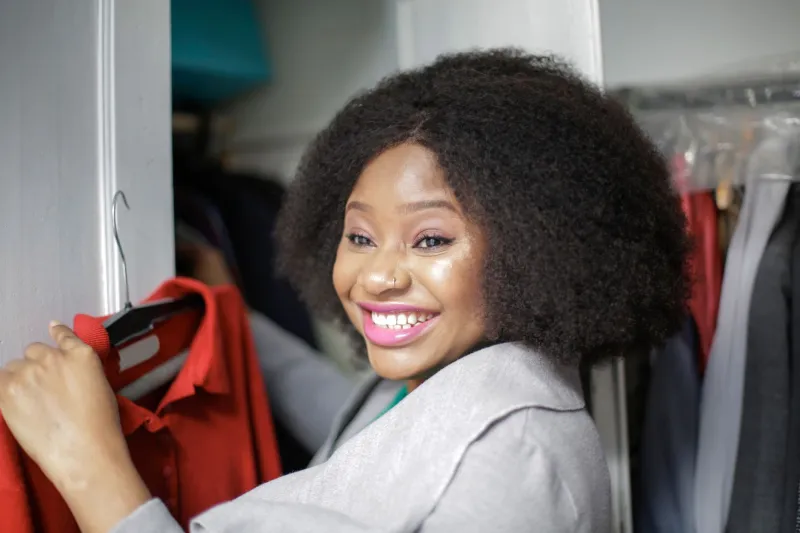
There's a moment a lot of people don't talk about. It comes somewhere in the fog of a hard season — maybe it's three weeks after a breakup, or a month into a job search that's going nowhere, or the morning after a funeral when the casseroles have stopped arriving and the world expects you to just... resume. You stand in front of your closet, and for the first time in a while, you reach past the sweatshirt you've been living in and pull out something real. Something you.
That moment is smaller than it sounds. And also so much bigger.
The Closet as a Mirror
Dr. Renata Osei, a licensed therapist based in Atlanta who works with clients navigating major life transitions, says what we wear during grief and change is rarely random — even when it feels that way.
"Clothing is one of the first nonverbal signals we send to ourselves," she explains. "When someone stops caring about how they look, that's often a reflection of a deeper withdrawal. But the reverse is also true. When they start making intentional choices again — even small ones — that's frequently a sign that some part of them is ready to re-engage with life."
She's careful to note that there's no timeline for this. Wearing pajamas for two weeks after a loss isn't a failure. It's often necessary. But somewhere on the other side of that, the clothes start to matter again.
What Real Americans Are Saying
Marissa, 34, from Columbus, Ohio, remembers the exact outfit she wore to her first post-divorce outing with friends. "It was a yellow wrap dress I'd bought years before but never worn because my ex said it was 'too much.' I put it on and I cried in the bathroom before I left — not because I was sad, but because I finally looked like myself again."
For Derek, 41, a marketing director in Dallas who was laid off during a company restructuring, the turning point came when he stopped wearing athleisure to his home office and started dressing as if he had somewhere to be. "Nobody was watching. But I was watching. And I needed to see someone who still had it together."
These aren't vanity stories. They're survival stories told through fabric and color and the small, deliberate act of choosing.
The Psychology Behind the Outfit
Researchers have a term for it: enclothed cognition. It's the idea that what we wear influences not just how others perceive us but how we think and feel about ourselves. Studies have shown that people wearing clothes associated with competence or confidence actually perform better on tasks requiring focus and attention.
But beyond the science, there's something deeply human happening here. Getting dressed — really dressed, with intention — is an act of self-assertion. It says: I'm still here. I'm still someone.
Nashville-based personal stylist Candace Briley has worked with clients through divorces, bereavements, and career reinventions for over a decade. She says the comeback outfit isn't always a dramatic transformation.
"It doesn't have to be a power suit or a bold color. Sometimes it's just clean clothes that fit properly. Sometimes it's wearing the earrings that have been sitting in the dish by the sink for six months. The point is the intention behind it — the choice."
She often starts sessions with grieving or transitioning clients by asking a simple question: What did you used to love wearing before everything got hard? The answers, she says, are almost always illuminating.
Dressing Forward, Not Just Dressing Up
There's a difference, Candace points out, between dressing to perform wellness and dressing to move toward it. The first is exhausting and often counterproductive — putting on a brave face that fools everyone except yourself. The second is something more honest.
"I always tell clients: dress for where you want your head to be, not where it currently is. Not fake it till you make it. More like... dress for the version of yourself that's still there, waiting."
This distinction resonates with Dr. Osei, who incorporates what she calls "embodied rituals" into her therapeutic work. Getting dressed mindfully — paying attention to texture, to fit, to color — can serve as a grounding practice, pulling someone out of anxious thoughts and back into their body.
"It's sensory. It's present-tense. When someone is grieving or anxious, they're often living in the past or the future. The act of getting dressed, done slowly and with care, can be one way back to right now."
The Permission Slip Nobody Gives You
Maybe the most important thing about the comeback outfit is this: nobody tells you that you're allowed to care about it.
After a loss, especially grief after death, there can be an unspoken cultural pressure to stay in mourning — to signal your pain through appearance as much as emotion. Caring about what you wear can feel frivolous, even disrespectful.
But joy and grief aren't opposites. You can miss someone deeply and still want to wear your favorite color. You can be heartbroken over a relationship and still feel the small, electric thrill of an outfit that makes you feel alive.
Marissa from Columbus puts it simply: "Wearing that yellow dress didn't mean I was over it. It meant I was still in it — and still going."
Small Steps, Real Momentum
If you're in the middle of a hard chapter right now, you don't need a style overhaul. You don't need a shopping trip or a Pinterest board or a new "aesthetic." You just need one outfit. One deliberate choice.
Maybe it's the jeans that actually fit. The sweater that feels like a hug. The lipstick you forgot you loved. The shoes that make a satisfying sound when you walk.
Wear the thing. Not because everything is fine. Not to pretend. But because you are still here, still worth dressing, still someone who gets to move forward — even on the days when forward feels impossibly far away.
That's the quiet magic of the comeback outfit. It doesn't announce your recovery. It just quietly begins it.