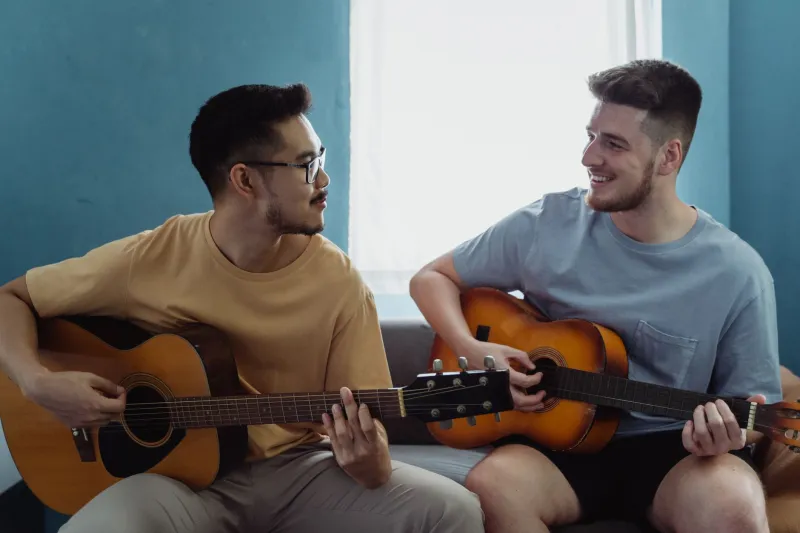
That One Song Knew You Before You Remembered Yourself
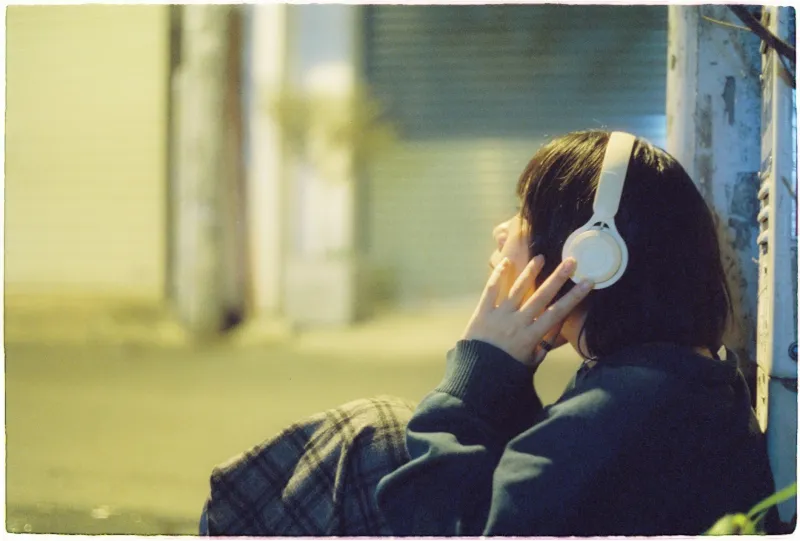
It happens without warning. You're standing in the cereal aisle, or stuck in traffic on the 405, or folding laundry on a Tuesday afternoon that feels exactly like every other Tuesday — and then it starts. A few notes. A specific drum pattern. A voice you haven't heard in years. And suddenly, you're not in that grocery store anymore.
You're seventeen. You're fearless. You're you — a version of you that somewhere along the way, quietly got left behind.
This is musical time travel. And it's more real, more powerful, and more scientifically fascinating than most of us ever stop to appreciate.
Your Brain on Nostalgia
Here's the wild part: when a familiar song hits, your brain doesn't just remember — it relives. Neuroscientists call it the "reminiscence bump," a well-documented phenomenon where music heard during emotionally formative years (roughly ages 12 to 25) gets encoded with an intensity that almost nothing else matches. The hippocampus, the amygdala, and the brain's reward centers all fire together, creating what researchers describe as a kind of neurological fingerprint.
That fingerprint doesn't fade. It just waits.
Dr. Petr Janata at UC Davis has spent years studying how music activates the medial prefrontal cortex — the part of your brain most closely tied to your sense of self. His research suggests that certain songs don't just trigger memories of events. They trigger memories of who you were during those events. The feelings. The confidence. The dreams you hadn't talked yourself out of yet.
In other words, music doesn't just remind you of the past. It can temporarily restore a part of your identity you thought was gone.
When the Right Song Finds You at the Right Time
Ask around, and you'll find that almost every American has a story like this. The details change, but the emotional shape stays the same.
Marcelline, a 38-year-old teacher from Atlanta, was driving home after a particularly brutal week — the kind where you start quietly wondering if you chose the right life — when a song from her college days shuffled onto her phone. It was an old R&B track she hadn't heard in over a decade. "I had to pull over," she says. "Not because I was sad. Because I suddenly remembered that I used to paint. Like, seriously paint. I had forgotten that was part of me."
She signed up for an art class the following week. She's been painting every Sunday morning since.
Then there's Dominic, a 44-year-old contractor in Cleveland who rediscovered a punk album he'd loved at 19 while helping his teenager clean out a storage unit. "I hadn't thought about that music in twenty years. But the second it came on, I remembered this whole version of me — this kid who didn't care what anyone thought, who just went for stuff." He laughs. "I started my own business six months later. I'm not saying the song did that. But it reminded me I used to be someone who would."
Stories like these aren't rare. They're everywhere, if you ask.
Why Now Matters as Much as the Song Itself
Here's something the science hints at but rarely says plainly: the song you've heard a hundred times before can land completely differently depending on where you are in your life when it finds you again.
Context is everything. A breakup song hits differently at 40 than it did at 22. An anthem about freedom means something new after a few years of feeling stuck. The melody is the same. You are not.
Psychologists who study identity transitions — the big shifts like career changes, becoming a parent, losing someone, or simply growing older — note that people in the middle of those transitions are especially vulnerable to what they call "identity-relevant nostalgia." Essentially, when we're figuring out who we're becoming, we become more receptive to reminders of who we've already been. The timing isn't random. We find these songs (or they find us) because some part of us is actively looking for the thread that connects past-us to present-us.
That's not weakness. That's wisdom.
Building Your Own Comeback Playlist
So what do you do with all of this? You lean into it, intentionally.
A growing number of therapists and wellness coaches are actually incorporating music-memory work into their practice — asking clients to build what some are calling "identity playlists," collections of songs that connect them to different versions of themselves. Not as a way of living in the past, but as a way of excavating strengths, values, and dreams that may have gotten buried under the weight of adult life.
You don't need a therapist to try this, though. Start simple:
Dig back deliberately. Think about a time in your life when you felt most like yourself — most alive, most confident, most you. What were you listening to then? Don't overthink it. Let your gut answer first.
Give it a real listen. Not as background noise. Sit with it. Let it do what it wants to do. You might feel something unexpected. That's the point.
Notice what surfaces. Not just memories, but qualities. Were you braver then? More creative? Less worried about what people thought? Those qualities didn't disappear. They're still in there, waiting.
Let it be a door, not a destination. Nostalgia is most powerful when it's forward-facing — when it reminds you of who you can still be, not just who you used to be.
The Magic Is Already in the Music
There's something quietly beautiful about the idea that the songs we loved at our most formative moments are still carrying pieces of us, patiently encoded in a few minutes of melody and rhythm, ready to hand those pieces back whenever we're ready to receive them.
Life has a way of narrowing us. Responsibilities stack up. Self-editing becomes a habit. The wild, hopeful, unfinished version of yourself starts to feel like a stranger — or worse, like a fantasy.
But then a song comes on. And just like that, that stranger is standing right next to you in the cereal aisle, grinning like they knew you'd find your way back eventually.
Maybe the comeback you've been waiting for doesn't start with a plan or a resolution or a big dramatic moment. Maybe it starts with pressing play.