Pick It Back Up: How Forgotten Hobbies Are Quietly Becoming America's Greatest Source of Joy
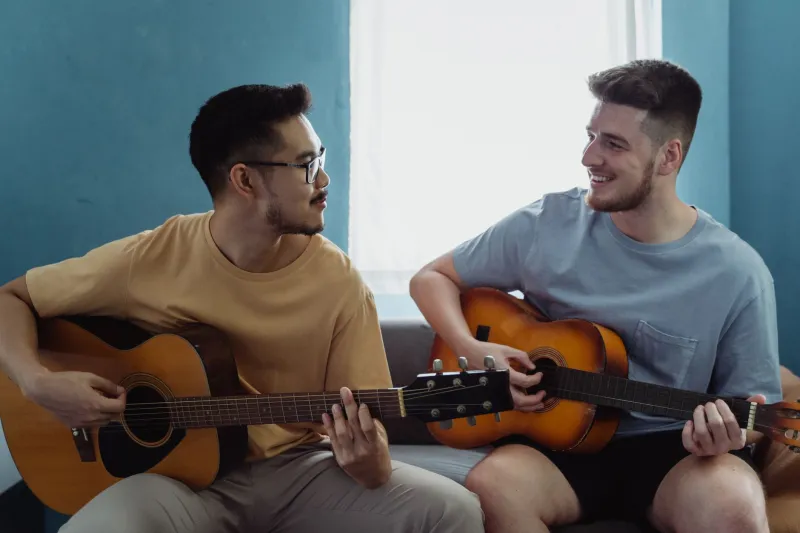
There's a guitar in Marcus Webb's garage in Chattanooga, Tennessee that sat untouched for eleven years. Not because he stopped loving music — he never did — but because life, as it tends to do, just sort of buried it. A promotion here, a new baby there, a cross-country move, and suddenly the instrument that once defined his Friday nights was nothing more than a very expensive dust collector.
Then, during a particularly slow Sunday last spring, Marcus picked it up again. "I figured I'd be terrible," he laughs. "And I was. But I also couldn't put it down."
Marcus isn't alone. Across the country, something quietly wonderful is happening. Americans are returning to the hobbies they left behind — the watercolors, the vegetable gardens, the knitting needles, the roller skates — and discovering that these rekindled passions carry a kind of joy that's hard to manufacture any other way.
Why We Walk Away in the First Place
Here's the thing nobody tells you about hobbies: they're often the first casualty of a busy life. Not because we stop caring, but because we start prioritizing productivity above nearly everything else. In a culture that constantly asks what are you working toward?, the idea of doing something purely for fun can feel almost rebellious.
Dr. Priya Mehta, a behavioral psychologist based in Chicago, puts it plainly: "We condition ourselves to believe that time spent on something with no measurable output is wasted time. But that framing is deeply flawed. The activities we do just because we love them are often the ones doing the most important psychological work."
That work, she explains, includes stress regulation, identity reinforcement, and something researchers call autotelic experience — the feeling of being so absorbed in an activity that time seems to dissolve. You probably knew it as being "in the zone." Scientists call it flow. Either way, it feels fantastic.
Your Brain Remembers More Than You Think
One of the most surprising things about returning to an old hobby is how quickly the body and mind recall what they once knew. This isn't just a feel-good anecdote — it's neuroscience.
The brain forms what are called myelin sheaths around neural pathways that get used repeatedly. When you practice guitar, paint, or even perfect your grandmother's tamale recipe, your brain is literally wiring itself to support that skill. And here's the magical part: those pathways don't fully disappear when you stop. They weaken, sure. But they don't vanish.
"Returning to something you practiced years ago is very different from learning it brand new," says Dr. James Calloway, a neuroscientist at the University of Michigan. "The brain recognizes those old patterns and begins to rebuild them faster than it built them the first time. People often describe it as muscle memory, but it's really the whole nervous system remembering."
For Marcus and his dusty guitar, this meant going from fumbling through basic chords to playing full songs within just a few weeks. "My fingers knew things my brain had totally forgotten," he says. "It was like meeting an old friend."
Nostalgia as a Doorway, Not a Dead End
There's a common misconception that nostalgia is about living in the past. But researchers increasingly view it as a forward-facing force — a way of reconnecting with the parts of yourself that got left behind during life's busiest chapters.
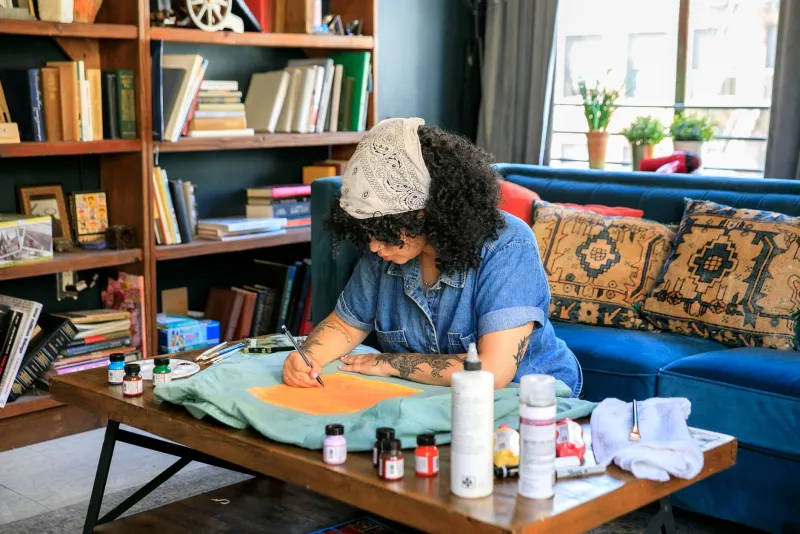
When Sandra Okafor of Atlanta, Georgia pulled her oil paints out of storage after nearly a decade away, she wasn't trying to recapture her college years. She was trying to find herself again after a difficult divorce. "Painting was mine," she says. "It was the one thing that had always been just for me. Coming back to it felt like coming home."
Sandra's experience echoes what psychologists call self-continuity — the sense that there's a thread connecting who you were to who you are now. Returning to old hobbies can strengthen that thread in ways that therapy, journaling, or even conversation sometimes can't. It's experiential. It's physical. It's real.
The Community Surprise
Something else unexpected tends to happen when people pick up old passions: they find their people.
Take Derek and Lena Fontaine from Portland, Oregon. Derek had been a competitive cyclist in his twenties before a knee injury sidelined him. At forty-three, he started riding again — nothing intense, just weekend trails. Within three months, he and Lena had joined a local cycling club, made six new close friends, and were planning a group trip through the Columbia River Gorge.
"I didn't go back to cycling looking for community," Derek admits. "I just wanted to move my body in a way that felt good. But the people who showed up around it — that was the real gift."
This pattern repeats itself across hobby types. Gardening clubs, community theater groups, adult recreational sports leagues, weekend pottery studios — these spaces have become unexpected gathering places for people who are rediscovering not just their passions, but their sense of belonging.
Small Starts, Big Shifts
If you're feeling the pull toward something you once loved, experts suggest keeping the re-entry low-pressure. The goal isn't to perform — it's to play. Literally.
Start with fifteen minutes. Pull out the sketchbook without any intention of making something good. Plant one container of herbs before committing to a full garden. Sit at the piano and press a few keys just to hear what they sound like.
Dr. Mehta emphasizes that the joy lives in the doing, not the result. "Adults are often terrified of being bad at something. But beginners — even returning beginners — are in a uniquely beautiful position. They get to experience pure discovery. There's no audience. There's no grade. There's just the thing itself."
For Sandra, that philosophy changed everything. "I stopped trying to paint like I used to," she says. "And I started painting like I do now. Turns out, she's a lot more interesting anyway."
The Permission You've Been Waiting For
Here's what the science, the stories, and the smiling faces of people like Marcus, Sandra, and Derek are all quietly pointing toward: you don't need a reason to return to something you love. Joy is reason enough.
The hobbies you shelved weren't failures. They were chapters waiting to be continued. And the version of you that picks up the brush, the instrument, the garden trowel, or the roller skates again? That person is not going backward. They're going somewhere entirely new.
So maybe it's time to dig through the garage. Dust off the case. Unroll the canvas. The comeback playlist is ready — and it starts with whatever made you happiest before the world got so loud.
What's the hobby you've been meaning to return to? We'd love to hear your story over on our community page.