Nobody Meant to Start a Collection — Until They Did
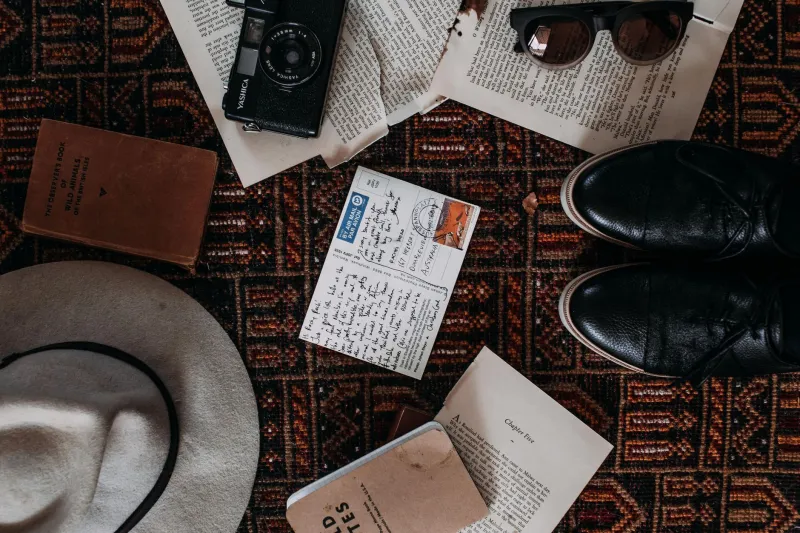
There's a shoebox under Darnell's bed in Atlanta that he hasn't been able to throw away for eleven years. It holds a broken watch, a concert wristband from a show he almost didn't attend, and a fortune cookie slip that reads "The detour is the destination." He didn't set out to collect anything. And yet, somehow, that shoebox has become one of his most treasured possessions.
"I can't explain it," he laughs. "None of it is worth anything. But every single piece in there tells a story I don't want to forget."
Darnell isn't alone. Quietly, accidentally, beautifully — Americans everywhere are stumbling into collections they never planned. And in the process, they're finding something genuinely wonderful.
The Junk Drawer That Became a Time Capsule
Ask anyone in the country about their junk drawer and watch their face shift. There's usually a flicker of something — a little sheepishness, sure, but underneath it? A kind of warmth. Because junk drawers aren't really junk. They're autobiographies in object form.
In Portland, Oregon, Mia started tucking away ticket stubs from every movie she saw alone during a particularly hard season of her life. "It started as a weird little habit," she says. "But when I looked at them all together, it was like reading a diary I didn't know I was keeping. Each one reminded me of exactly who I was that day."
That impulse — to hold onto the small, physical proof that something happened — is deeply human. Psychologists who study material culture point out that objects carry emotional residue in a way that digital records simply can't replicate. A photograph on your phone is easy to scroll past. A dog-eared movie ticket with a coffee stain? That's a whole afternoon.
Thrifted Books and the Strangers Who Loved Them First
Walk into any Goodwill or secondhand shop in America and you'll find them: books with handwriting in the margins. Underlined sentences. Dedications on the inside cover. "To Carolyn, who always believed in happy endings. Love, Mom. Christmas 1987."
For many accidental collectors, these inscribed books have become a genuine obsession — not for their monetary value, but for the tiny windows they open into other lives.
Rachel, a librarian in Nashville, has been picking them up for years. She now has over two hundred. "There's one that says, 'I hope this book finds you when you need it most,'" she says softly. "And honestly, it did. I found it at a church sale the week after my divorce was finalized. I don't think that's nothing."
There's a whole community of people like Rachel online — folks who photograph the inscriptions they find and share them, who speculate about the lives behind the words, who feel a thread of connection to someone they'll never meet. It's a kind of accidental archaeology. And it's surprisingly moving.
Postcards from Nowhere in Particular
Somewhere along the way, postcards became unfashionable. Email arrived, then texts, then DMs, and suddenly nobody was dropping a hand-addressed card into a mailbox anymore. Which means that vintage postcards started appearing everywhere — at estate sales, in antique shops, stuffed into old books at flea markets.
Jamie in Chicago has been collecting them since he found a stack at a garage sale in Wicker Park for fifty cents. "They were from the 1940s and 50s, mostly just 'Having a great time, wish you were here' stuff," he says. "But the handwriting. The stamps. The fact that someone stood somewhere beautiful and thought of someone they loved enough to write to — that got me."
His collection now covers an entire wall of his apartment, arranged by color. Strangers stop in their tracks when they see it. "Every single person asks about them," Jamie says. "It's the best conversation starter in the world."
And that might be one of the most underrated gifts of the accidental collection: it becomes a bridge.
When Clutter Becomes Connection
Here's the thing about objects we accumulate without intention — they're honest. A carefully curated display shelf says something about who you want to be. A junk drawer, a shoebox, a wall of found postcards? That says something about who you actually are.
And when you share those collections with other people, something shifts. Conversations go deeper. People start pulling out their own forgotten treasures. Suddenly you're not just talking about stuff — you're talking about first concerts and lost loved ones and the summer everything changed and the stranger on the train who handed you a book and said "You look like you need this."
Lena in Austin keeps a mason jar of coins from every country she's ever visited — plus a few from countries she hasn't, gifted by friends and strangers over the years. "My nephew goes through it every time he visits," she says. "We Google every coin together. It's become our thing."
That's the magic, right there. An accidental collection turning into a ritual. A ritual turning into a relationship.
The Art of Letting Things Stay
We live in a culture that's pretty obsessed with decluttering. And look — there's real value in clearing out the noise. But somewhere in the rush to minimize, we risk throwing away the things that actually matter, precisely because they don't look like they matter.
The ticket stub from the night you met your best friend. The menu from the restaurant where you had your first real grown-up dinner. The little plastic toy from a gumball machine that your kid gave you like it was the most precious thing in the world — because to them, it was.
Maybe the question isn't "Does this spark joy?" Maybe it's "Does this spark a story?"
Because the most magical collections aren't the ones arranged behind glass. They're the ones that spill out of shoeboxes and junk drawers and overstuffed bookshelves. They're the ones that make you laugh and ache and say, "Oh, I forgot about that." They're the ones that remind you — gently, unexpectedly — of every version of yourself you've ever been.
Darnell still has that shoebox under his bed. He added something new to it last month: a napkin from a diner where he had breakfast with his dad on a random Tuesday that turned out to be one of the best days of his life.
"I don't know what I'm collecting, exactly," he says. "But I know I'm not stopping."
Good. Don't stop. The accidental collections are the ones worth keeping.