That Old Jacket Knew Something You Didn't: How a Forgotten Piece of Clothing Can Unlock the Next Version of You
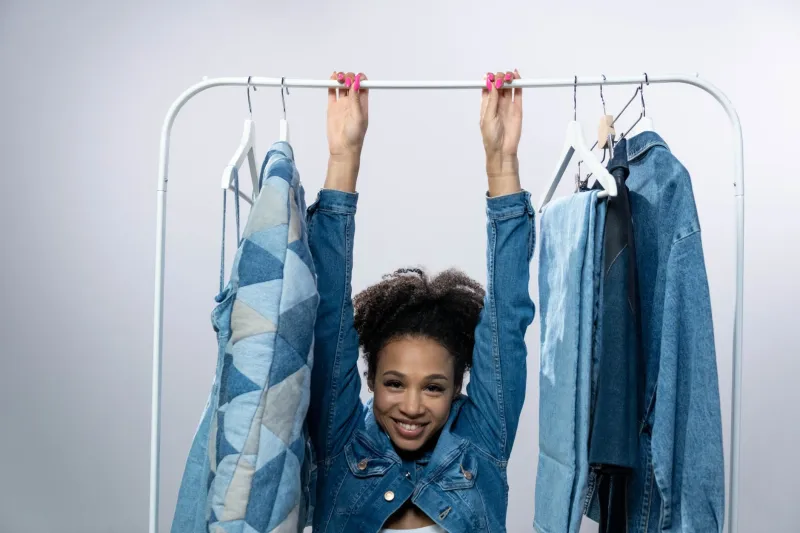
There's a very specific kind of magic that happens when you pull something out of the back of your closet and think, oh, there you are. Not the item — you. The you that wore it the first time, the you that packed it away, and maybe a third you, the one standing right now in front of the mirror, deciding whether to put it on again.
For a lot of Americans, that moment isn't just sentimental. It's transformative.
The Clothes We Can't Let Go Of
Most of us have at least one. A leather jacket that survived three apartments. A dress you wore the night something important happened. A pair of boots that felt like armor during the hardest year of your life. You've edited your wardrobe a dozen times since then — KonMari-ed your way through two closets, donated bags to Goodwill, sold things on Poshmark — and yet that piece stayed.
Psychologists have a name for the emotional bond we form with objects: attachment to possessions. But when it comes to clothing specifically, the connection runs even deeper. What we wear is wrapped up in identity, memory, and aspiration all at once. A garment doesn't just remind you of who you were — it can actually help you become who you're trying to be.
Dr. Karen Pine, a professor of psychology at the University of Hertfordshire who has studied the relationship between clothing and mood, has found that what we choose to wear directly affects our psychological state. "Clothes," she's written, "are never just clothes." They carry emotional residue. They hold the shape of past selves. And sometimes, they hold something we weren't ready for yet.
Real People, Real Comebacks
Take Marisol, 38, from Austin, Texas. After a decade in corporate marketing — a career she describes as "beige, in every sense" — she left her job to start a ceramics studio. During the move out of her downtown office, she found herself digging through her closet at home and rediscovering a bright orange linen blazer she'd bought in her mid-twenties, back when she was still figuring out who she was.
"I'd bought it on a whim at a vintage market in New Orleans," she says. "It felt like me at the time, but then I got serious about my career and I thought it was too loud. Too much." She'd kept it through four moves. When she put it on the day she filed her business license, something clicked. "It wasn't about the blazer. It was about remembering that the loud, colorful version of me had been right all along."
Or consider Jerome, 52, a high school history teacher from Cleveland, Ohio, who rediscovered a vintage Starter jacket from his college years tucked in a storage bin after his youngest daughter left for college. The empty nest hit him hard. "I didn't know who I was outside of being a dad," he admits. Pulling on that jacket — a relic from a time when he played in a local band and stayed out until two in the morning — felt like a conversation with his younger self. He started playing music again within a month. "That jacket gave me permission," he says simply.
Why 'New' Isn't Always the Answer
When we go through big life transitions — a divorce, a career change, a health journey, becoming an empty nester — the cultural reflex is to buy something new. Treat yourself. Refresh the wardrobe. Signal the change with a new look. And there's nothing wrong with that. But there's something uniquely powerful about the opposite impulse: reaching backward to reach forward.
New clothes have no history. They're a blank slate, which can feel freeing, but can also feel unmoored. A garment with personal history carries proof. Proof that you've navigated hard things. Proof that a version of you existed before the hard thing happened — and survived. When you wear something loaded with memory, you're not just dressing yourself. You're telling your nervous system: I've been okay before. I can be okay again.
Stylist and wardrobe consultant Tanya Osei, who works with clients in New York and virtually across the country, has noticed this pattern in her practice. "I'll ask clients to bring out pieces they love but haven't worn, and inevitably there's something from a pivotal time in their life — a first apartment, a trip they took alone, a version of themselves they lost somewhere along the way. When we revisit those pieces, it's almost always emotional. And then it's almost always energizing."
The Bridge Between Then and Now
What makes the comeback outfit so meaningful isn't nostalgia exactly — it's continuity. It's the thread that connects who you were to who you're becoming, proof that those two people aren't strangers.
Life in America tends to encourage reinvention as a total erasure: new city, new look, new you. But what if reinvention could be a conversation instead? What if the most powerful thing you could wear to your next chapter was something that already knows your name?
There's a certain confidence that comes from wearing something with history — your history. It fits differently than new clothes, not just because of the fabric, but because of everything it's witnessed. That blazer knows you quit the job that was making you miserable. Those boots were there when you got back up. That jacket was there before you knew how strong you were.
Go Check the Back of Your Closet
If you haven't done it in a while, this is your gentle nudge. Go dig. Past the things you bought on sale and never wore, past the impulse purchases and the "maybe someday" pieces. Find the thing you kept even when you couldn't explain why.
Try it on. Stand in front of the mirror. Notice what comes up.
You might find that the outfit isn't the only thing that's been waiting. You might find a version of yourself that's been quietly holding on, ready to step back into the light — wearing exactly the right thing for the occasion.
And that, honestly, is the kind of magic we live for here at Wonderful Chan Chan. The kind that was sitting in your closet the whole time.