The Day I Wore Yellow: How the Colors We Choose Are Quietly Telling Our Story
It wasn't a dramatic moment. There was no montage, no triumphant music. Kezia, 36, from Atlanta, just reached into her closet one morning after a year that had quietly dismantled her, and pulled out a mustard-yellow blazer she'd bought on impulse two years earlier and never touched.
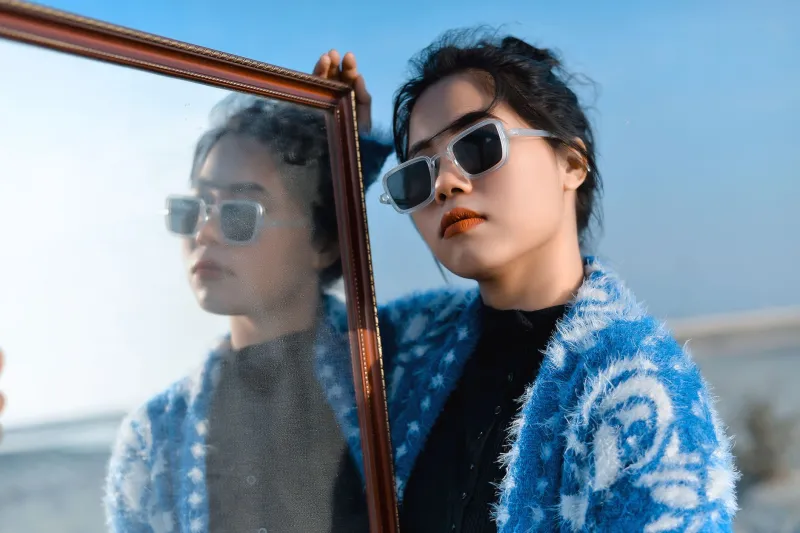
"I put it on and I stood there looking in the mirror for a while," she says. "And I thought — oh. There you are."
She wore it to work. Three people commented. She felt like herself in a way she hadn't in longer than she could name. And the next week, she bought a terracotta sweater. Then a pair of earrings the color of a tangerine.
Something had started. Something small and real and entirely her own.
Your Wardrobe Knows Things You Haven't Said Out Loud Yet
Clothing has always been communication — a way of signaling identity, status, belonging, mood. But there's a quieter, more personal conversation happening between Americans and their wardrobes right now, one that's less about trends and more about truth.
Color psychology — the study of how hues affect human emotion and behavior — has been a legitimate field of research for decades. And while the broad strokes are well-known (red excites, blue calms, yellow energizes), the more fascinating territory is what happens when individuals start making conscious, personal color choices rather than just following whatever the fashion industry declares is in this season.
When you deliberately choose a color because it makes you feel something — not because it's flattering or appropriate or expected — you're engaging in a kind of visual journaling. You're externalizing an internal state. And sometimes, remarkably, you're also creating one.
Researchers at the University of Hertfordshire found that people who dressed in colors they associated with happiness reported measurably higher mood scores throughout the day — not because the color caused the happiness, but because the choice to wear it was itself an act of self-affirmation.
You're not just wearing yellow. You're telling yourself you're someone who wears yellow now.
The Neutral Phase and What It's Really Saying
Not every color story is about going bold. For many people, a shift toward neutrals — cream, oatmeal, soft grey, warm white — represents its own kind of transformation.
After years of wearing what she describes as "corporate camouflage" — dark blazers, safe navy, nothing that would draw attention — Sofia, 42, from Seattle, started building what she calls her "quiet wardrobe" after leaving a high-pressure job in finance.
"I went almost entirely neutral for about a year," she says. "And at first I thought I was being boring. But actually I was decompressing. I was figuring out what I actually liked without the noise of everyone else's expectations."
The neutral phase, for Sofia and for many others, wasn't a retreat. It was a reset. A clearing of the visual palette before something new could emerge.
Now, two years later, her wardrobe is still largely muted — but she's added what she calls "intention pieces": a deep rust-colored coat, a single pair of cobalt blue trousers. Each one chosen slowly, deliberately, because it resonated with something specific she was becoming.
Vintage, Thrift, and the Archaeology of Self
For another group of Americans, the transformation isn't primarily about color — it's about era. The rise of vintage and thrift shopping has created a generation of people who are essentially building their identities out of other people's histories.
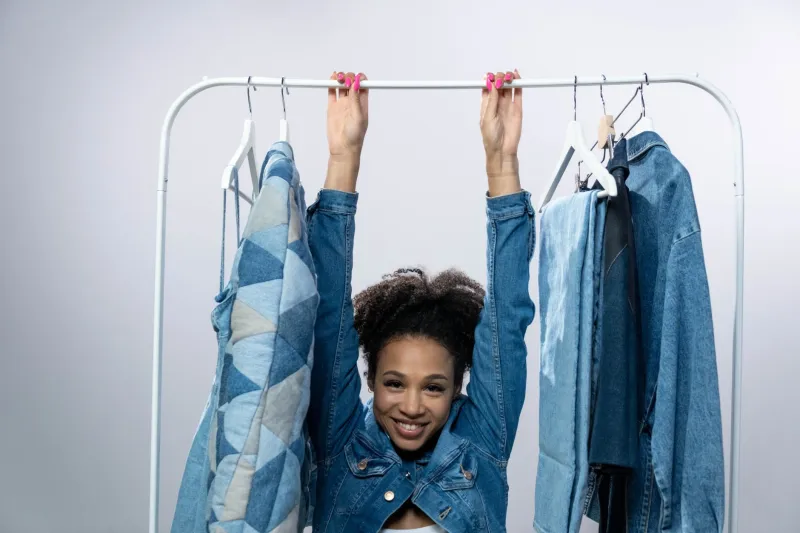
There's something inherently playful and exploratory about putting on a 1970s wrap dress or a 1990s oversized denim jacket. You're trying on not just a garment but a sensibility, a set of cultural references, a particular kind of freedom that existed in a different decade.
Jordan, 27, from Brooklyn, started thrifting seriously during the pandemic and describes the experience as transformative in ways they didn't expect. "I found this incredible 80s blazer with massive shoulders at a Goodwill in Queens. I put it on as a joke. But then I kept wearing it. And I started standing differently in it. Like, taking up space differently."
The blazer, Jordan says, became a kind of permission slip. "It sounds so silly. But sometimes you need something outside yourself to tell you that you're allowed to be bigger than you've been."
Color as Courage
One of the most consistent themes in these stories is the idea of color — or style — as a form of courage. Not the dramatic, headline-grabbing kind, but the quiet, daily courage of showing up as yourself when you're not entirely sure who that is yet.
For Priya, 33, from Houston, it was red. "I grew up being told red was too loud, too much. That I should blend in. I wore a red dress to a friend's birthday and someone said, 'Wow, you're brave.' I thought — brave? It's a color. But then I thought about it, and yeah. For me, it kind of was."
That micro-bravery — the choice to wear something that feels like you rather than something that feels safe — accumulates over time. It becomes a practice. And like any practice, it changes you.
Dressing Forward
One of the more fascinating things that color psychologists and personal stylists have observed is the phenomenon of dressing forward — choosing clothes that reflect not who you are right now, but who you're in the process of becoming.
It's not about fake-it-till-you-make-it. It's subtler than that. It's about giving your future self a little runway. About deciding, even before you feel it fully, that you are someone who wears yellow blazers, or cobalt trousers, or a vintage wrap dress with the confidence of a woman who has absolutely figured it out.
You probably haven't figured it all out. Neither has anyone else. But the outfit helps.
And maybe that's the whole point — not that clothes make the person, but that sometimes they help the person remember who they already are.
So go ahead. Reach for the color you've been avoiding. Try the silhouette that feels like a stretch. Wear the thing that makes you stand differently in the mirror.
Your wardrobe is listening. And it's been waiting for you to start talking.