Come Over Tonight: The Beautiful Chaos of the Unplanned Gathering
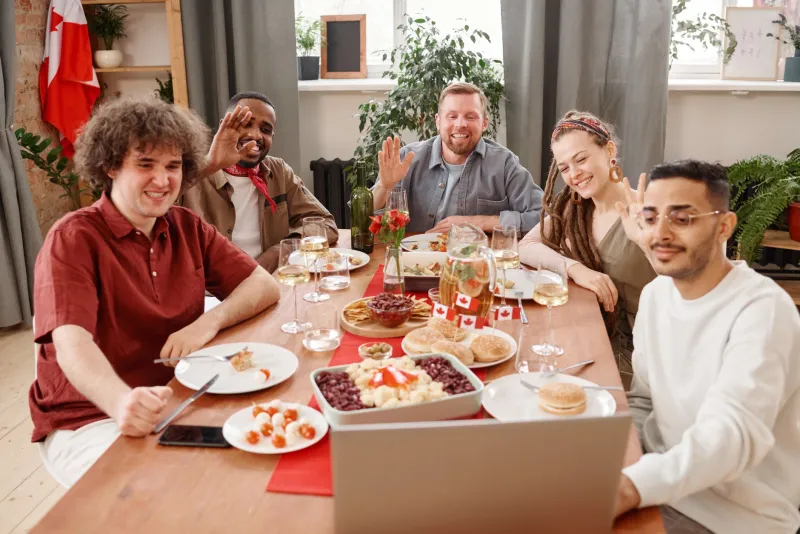
It usually starts with a text. Something like: Hey, doing nothing tonight, want to come over? Or maybe it's a phone call that ends with just bring yourself, we'll figure out food. No Evite. No theme. No curated playlist queued up three weeks in advance. Just people, showing up, making it work.
And somehow — almost every single time — it turns into something unforgettable.
Across the country, Americans are rediscovering the profound, slightly chaotic magic of the spontaneous gathering. Not the meticulously planned dinner party with color-coordinated place settings and a timed three-course meal. The other kind. The kind where someone pulls out a board game nobody's played since college, where the conversation goes sideways in the best possible way, where you end up staying three hours longer than you planned because nobody wants to break the spell.
The Planning Paradox
Here's the funny thing about highly organized social events: the more effort that goes into them, the more pressure everyone feels to perform. The host is anxious about the food. The guests feel obligated to dress up, stay an appropriate amount of time, compliment the right things. There's an invisible script, and everyone's trying to follow it.
Spontaneous gatherings blow that script up entirely.
When there's no time to overthink, people just show up — as themselves, in whatever they were already wearing, carrying whatever they grabbed on the way out the door. And that authenticity, that lack of performance, is exactly what creates the conditions for genuine connection.
Social psychologists call this the social facilitation effect — the idea that shared, low-stakes environments lower our social defenses and allow for more honest interaction. When nobody's trying to impress anyone, real conversations happen. Old stories surface. Unexpected friendships form.
'We Didn't Even Have Enough Forks'
Ask people about their most treasured social memories, and a surprising number of them involve some version of making do.
Tamara, 38, from Nashville, describes the night a few years ago when a rainstorm trapped her and four neighbors under her back porch. "We weren't even friends, really — just people who waved at each other. I grabbed some wine and crackers, someone else ran home and came back with leftover pasta, and we were out there for four hours. I know those people better now than some of my lifelong friends."
For Marcus, 45, from Philadelphia, it was a Tuesday night in his apartment that started with two people and somehow grew to eleven. "I had literally nothing prepared. We ordered three different pizzas from three different places because nobody could agree. We pushed all the furniture to the walls and sat on the floor. I still talk about that night. I don't know why it was so good, but it was."
The answer, of course, is that it was so good because of the imperfection, not in spite of it. The scrambling, the improvising, the collective problem-solving of how do we feed nine people with what's in this kitchen — that's not a failure of hospitality. That's the hospitality.
The Potluck Is Having a Moment
One of the most interesting expressions of this trend is the quiet comeback of the potluck. Once considered a relic of church basements and neighborhood associations, the bring-a-dish format is being embraced by younger Americans as a genuinely democratic, low-pressure way to gather.
The beauty of the potluck is that it distributes both the effort and the ownership. Nobody is the lone host carrying the weight of everyone's experience. Everyone contributes, everyone belongs, and the table ends up being a kind of edible portrait of the people in the room — the homemade tamales next to the store-bought pie next to the elaborate charcuterie board next to the single bag of tortilla chips that someone grabbed from a gas station and is now laughing about.
It's messy and mismatched and completely wonderful.
Lila, 31, from Denver, started hosting monthly "open table" nights after moving to a new city. "The rule is just: show up if you want, bring whatever. I don't even confirm RSVPs. Sometimes eight people come, sometimes three. Every single time it's been exactly what I needed."
Why Low-Pressure Is Actually High-Connection
There's a concept in sociology called third places — the informal social environments that exist outside of home and work, where people gather without agenda. Bars, barbershops, front porches, community gardens. These spaces have historically been where some of the most meaningful social bonds are formed, precisely because they're not designed for any specific outcome.
The spontaneous gathering is essentially a third place that you create inside your own home. The absence of structure is the structure. The no-agenda is the agenda.
And in a cultural moment when loneliness is being called a public health crisis, when many Americans report having fewer close friends than they did a decade ago, the spontaneous gathering isn't just fun — it might be genuinely necessary.
How to Make It Happen
You don't need a special occasion. You don't need a clean house or a fully stocked kitchen or a reason beyond I want to see people I like.
Send the text. Make the call. Say "come over tonight" and mean it. Light some candles if you have them, or just turn on every lamp in the living room for that warm, golden effect. Put on a playlist you like. Open whatever's in the fridge.
The people who matter won't care about the forks. They'll care that you called.
And years from now, when someone says remember that night at your place? — you'll know exactly which one they mean.